Category: Courts & Justice
-
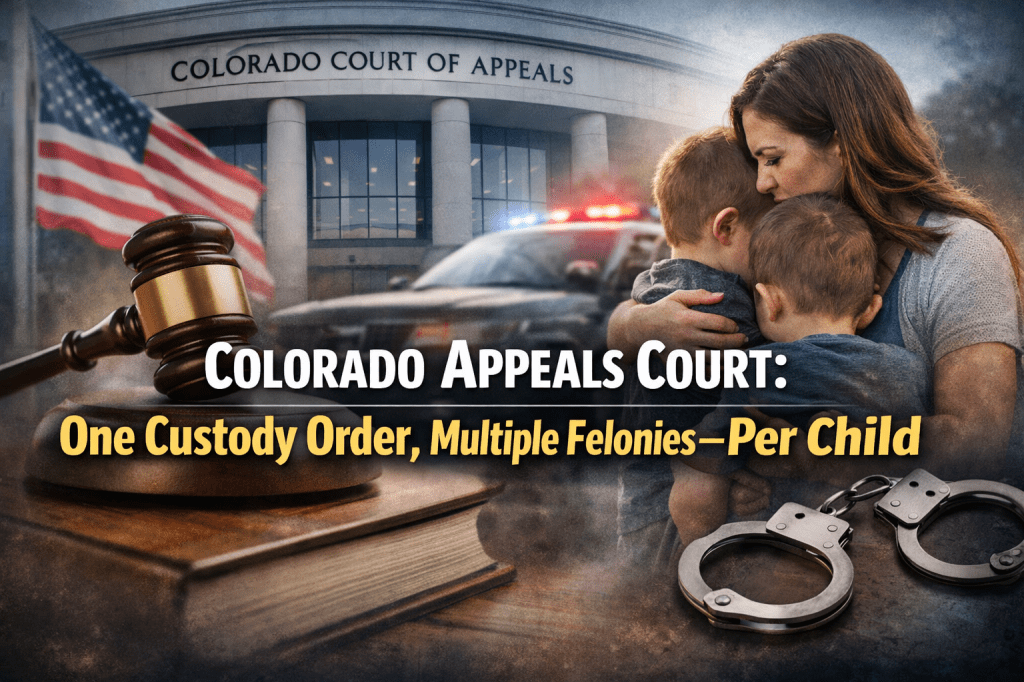
Colorado Appeals Court: One Custody Order, Multiple Felonies—Per Child
A Colorado Court of Appeals ruling allows prosecutors to charge separate felonies for each child affected by a custody violation, even under one order. This decision increases legal repercussions for parents, offering prosecutors greater leverage in plea negotiations. Concerns arise regarding potential overreach and the impact on families during custody disputes.
-

California Judge Strikes Down Statewide ‘Parental Exclusion’ Policies in Landmark Ruling
U.S. District Judge Roger T. Benitez ruled California’s “parental exclusion” policies unconstitutional, blocking state mandates that required schools to conceal children’s gender identity changes from parents. The decision reinforces parental authority in education, impacting 300,000 teachers and over six million students while emphasizing the importance of parental involvement in children’s well-being.
-
When Courts Release the Manual but Not the Map
The article discusses the implications of California Rule 10.500 for public access to court records, particularly in the case of People v. Smiel. It highlights how the Los Angeles Superior Court’s transparency efforts, while disclosing training materials, still restrict structural access. This raises questions about the necessary level of transparency in digital justice systems.
-

CARE Court’s Broken Promise: Why California Families Feel Let Down by Newsom’s Mental Health Reform
California’s CARE Court, launched in 2022 to aid those with severe mental illnesses, has become a source of frustration for families. With participation being voluntary, many individuals disengage from treatment, leading to homelessness and incarceration. Despite some successes, it fails to reach the most critical cases, prompting calls for stronger intervention.
-
When Allegations Outlive the Case
The article explores the complexities of unresolved criminal allegations within California’s court system, particularly in the context of the ongoing case against Giselle Smiel, who faces felony charges. It highlights the challenges of dismissals and protective orders that, while indicating institutional concern, lack definitive adjudicated findings, raising questions about fairness and transparency in legal processes.
-

LA District Attorney Records Show Investigators Authorized to Wear “POLICE” Uniforms — With No Training or Oversight on Public Confusion
Public records show Los Angeles County District Attorney investigators are authorized to wear uniforms labeled “POLICE,” even as the agency confirms it has no written training, audits, or oversight addressing whether such attire could mislead the public. The disclosures raise new questions about transparency, authority, and due process in sensitive child-related investigations.
-

FOR IMMEDIATE RELEASE – December 14, 2025
The Los Angeles Sheriff’s Department (LASD) has acknowledged that it lacks written policies governing criminal affidavits and the authority of District Attorney Investigators. This absence raises significant concerns about legal standards, due process, and accountability in law enforcement, affecting both the public and defense processes within the county.
-

FOR IMMEDIATE RELEASE — December 14, 2025
On October 6, 2025, the Los Angeles Superior Court held a significant hearing in the case of People v. Giselle Farias Smiel without public access or proper notification. Advocates, including ADA support personnel, were excluded. This breach of transparency undermines First and Sixth Amendment rights, as well as ADA Title II protections, raising serious legal…
-
The Public Has a Right to Know Whether Government Agencies Followed the Law Before Taking Someone’s Freedom.
Los Angeles and San Diego officials are under scrutiny for withholding public records related to the prosecution of Giselle Smiel, raising concerns over transparency and due process. Taxpayer-funded agencies are stalling information requests, undermining public trust in the justice system by obscuring the facts surrounding an arrest that severely impacts a citizen’s freedom.
-

Idaho Lawmakers Move Toward Sweeping Child Custody Reform—With New Penalties for Violations
Idaho lawmakers are set to overhaul child custody laws, addressing years of concerns about inconsistent rulings and parental rights deprivations. The new proposals, driven by the Child Custody and Domestic Relations Task Force, include a presumption of 50/50 joint custody, stronger enforcement measures, and provisions for child safety, aiming for clearer justice in family courts.
 California Bay News