By Michael Phillips | CABayNews
A Utah judge’s decision to release a lightly redacted transcript from a closed-door pretrial hearing in the capital murder case against Tyler James Robinson has once again thrust the state’s courts into the national spotlight—raising familiar questions about transparency, media influence, and public safety in politically charged prosecutions.
The 83-page transcript, stemming from an October 24, 2025 hearing in Utah County, was ordered released by Judge Tony Graf late last week. While certain security details remain redacted, the document provides a rare window into how courts are balancing a defendant’s right to a fair trial against the public’s demand for openness in a case many have labeled a political assassination.
Background: A Case That Shocked the Nation
Robinson, 22, is charged with aggravated murder and multiple felonies in the September 10 killing of conservative activist Charlie Kirk, co-founder of Turning Point USA. Prosecutors allege Robinson fired a single .30-06 rifle round from a rooftop during a “Prove Me Wrong” event at Utah Valley University, striking Kirk in the neck before fleeing the scene.
After a statewide manhunt, Robinson surrendered the following day, reportedly at the urging of his parents. Prosecutors say DNA evidence, written notes, and text messages show deliberate planning and political motive, and they have announced their intent to seek the death penalty.
What the Transcript Reveals
The newly released transcript focuses less on guilt or innocence and more on pretrial logistics—yet those issues may shape the entire case.
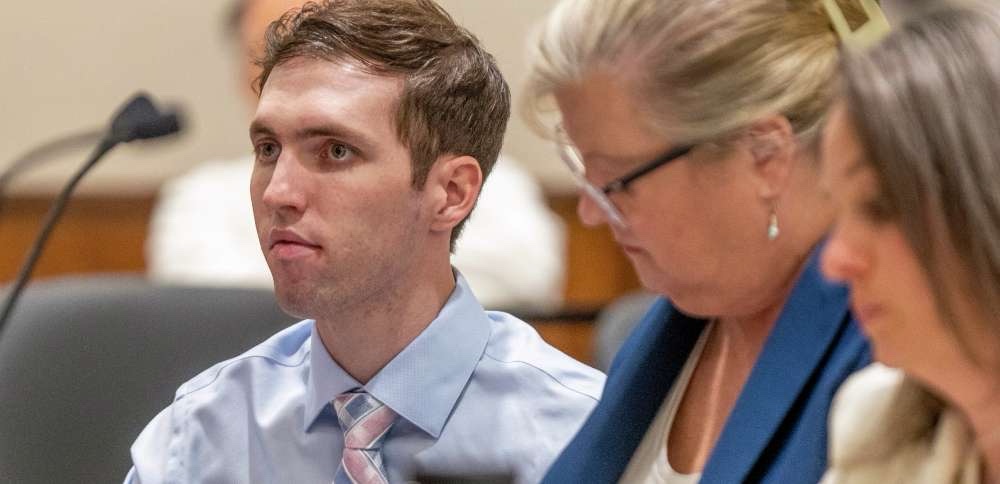
Defense attorneys argued that Robinson should appear in civilian clothing and without visible restraints, warning that images of jail attire or shackles could poison a future jury pool in a case already saturated with national media coverage. They also pushed to restrict cameras in the courtroom, citing what one attorney described as a “content tornado” fueled by social media and partisan outrage.
Prosecutors countered that Robinson posed a security risk, pointing to allegations that he changed clothes and attempted to blend in while fleeing the scene. They argued that restraints are standard practice in serious felony cases and necessary to protect court staff, spectators, and the public—especially given the passions surrounding the case.
Judge Graf struck a middle ground: Robinson may wear civilian clothes during hearings, but restraints will remain. Cameras are permitted under strict rules, including a ban on showing shackles. Graf rejected broader defense requests to seal the transcript, emphasizing Utah’s strong presumption of open courts.
Transparency vs. Spectacle
From a center-right perspective, the ruling underscores a core conservative tension: courts must be transparent and accountable, but not turned into media circuses that undermine justice.
Utah’s judiciary deserves credit for resisting blanket secrecy while still safeguarding security details. At the same time, the transcript reveals how easily high-profile cases risk becoming performative—driven by viral clips, commentary, and political narratives rather than sober fact-finding.
This concern is not theoretical. The defense has already moved to disqualify the Utah County Attorney’s Office over an alleged conflict involving a prosecutor whose relative witnessed the shooting. Media coalitions and Kirk’s widow have pressed for broader access, while the court has sanctioned at least one outlet for violating camera rules.
The Broader Implications
The Robinson case sits at the intersection of political violence, online radicalization, and public trust in institutions. For conservatives, it also raises uncomfortable but necessary questions: how should courts handle cases where ideology is alleged to be a motive, without drifting into show trials or suppressing uncomfortable facts?
As the preliminary hearing approaches in May 2026, Utah’s courts will continue walking a narrow line—protecting due process for a defendant accused of a horrific crime, honoring the public’s right to know, and ensuring that justice is decided in a courtroom, not on social media.
The release of the transcript is a step toward accountability. Whether the system can maintain that balance as the case intensifies remains an open—and critical—question.
 California Bay News
Leave a comment