What a Rule 10.500 Records Response Reveals About Public Access—and Why It Matters in People v. Smiel
By Michael Phillips | CABayNews
When members of the public seek records from California courts, they quickly encounter a distinction unfamiliar to many journalists and litigants: courts are not governed by the California Public Records Act (CPRA). Instead, access to judicial administrative records is governed by California Rules of Court, Rule 10.500, a framework designed to balance transparency with judicial independence.
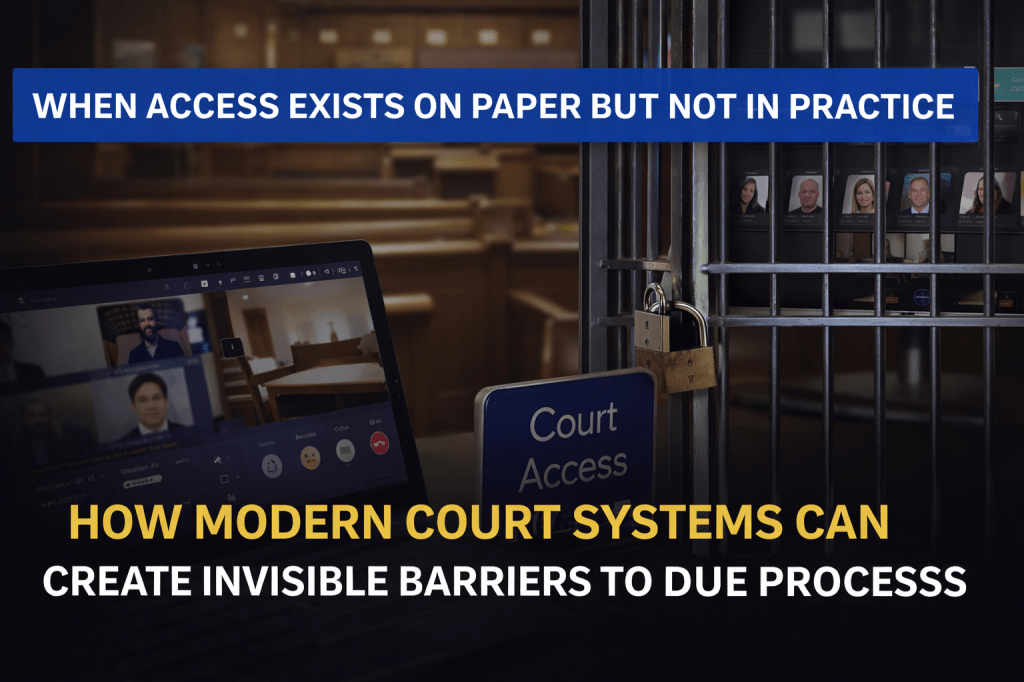
A recent records response from the Superior Court of California, County of Los Angeles provides a revealing case study in how that balance is applied in practice—particularly as courts increasingly rely on digital and remote-access systems that mediate public participation.
The Request—and the Response
The request sought administrative, structural information, not case files or judicial deliberations. Specifically, it asked for records describing:
- How department-level communications are structured
- How courtroom staff handle public and media communications
- Policies governing remote access, audio attendance, and digital participation
- Changes over time to these communication systems
The Court responded by partially complying. It produced a substantial set of internal policies and training manuals—including guidance for courtroom staff on handling public inquiries, processing correspondence, and managing remote hearings using Microsoft Teams and the Court’s LACourtConnect platform.
At the same time, the Court declined to produce certain categories of records, including staff directories and documentation identifying department-level communication channels, citing multiple exemptions under Rule 10.500.
On its face, this posture is not unusual. Courts routinely withhold information they believe could disrupt operations or compromise institutional integrity. But the content of the documents that were disclosed complicates that picture.
What the Disclosed Manuals Show
The materials released by the Court are not generic. They are detailed, operational guides used daily by courtroom staff. Taken together, they establish several important facts:
- Department-level systems are standardized and mandatory.
Training guides instruct judicial assistants to log in using department credentials, manage hearings within department-specific digital environments, and move participants between departments when hearings change. - Public access is actively mediated by staff through defined workflows.
Manuals describe how staff process incoming correspondence, respond to public inquiries, route messages, and escalate issues—all within standardized administrative systems. - Remote participation is not incidental; it is core infrastructure.
The Court’s own guides explain how staff admit, mute, remove, and reassign remote participants; generate attendee lists; and mask phone numbers using department accounts.
These are administrative functions, not judicial deliberations. The Court’s decision to disclose these manuals confirms that such records fall within Rule 10.500’s scope.
And yet, the Court declined to disclose structural information about the very systems those manuals describe.
The Transparency Tension
This creates a narrow but significant tension.
On one hand, the Court has been transparent about how staff are trained to operate communication and access systems. On the other, it has restricted visibility into the structure of those systems themselves—including how departments are organized for public contact and how communications are routed at a high level.
Importantly, this is not an allegation of wrongdoing. Rule 10.500 gives courts discretion, and institutional caution is understandable. But the contrast raises a reasonable question for the public:
If courts can disclose detailed manuals explaining how staff manage public access, what level of structural transparency is necessary for that access to be meaningful?
As court access becomes increasingly digital, the answer to that question matters.
Why This Matters in People v. Smiel
The implications are not abstract.
In People v. Smiel, as in many modern criminal cases, public access, remote observation, and communication with the court are not side issues. They shape how observers, journalists, and affected parties understand what happens inside the courtroom.
The disclosed manuals confirm that:
- Access to hearings is mediated by staff through department-level systems
- Decisions about admitting or redirecting participants are administrative
- Communication with the public is structured, not ad hoc
When questions arise in a case like People v. Smiel about who can access proceedings, how information flows, or how participation is managed, those questions are inseparable from the administrative systems documented in the Court’s own materials.
That does not mean the Court acted improperly in this case. It does mean that administrative transparency and case transparency intersect in ways that are increasingly difficult to separate.
A Broader Issue, Not a Single Case
The significance of this records response extends beyond People v. Smiel.
Across California—and nationally—courts are navigating a transition to hybrid justice systems that rely on:
- Remote audio and video access
- Centralized digital platforms
- Staff-mediated participation
Rule 10.500 was designed for this balancing act. But as courts disclose more about how their systems work, the line between operational secrecy and public understanding becomes harder to maintain.
This case study suggests that the next phase of court transparency will not hinge on whether records exist—they clearly do—but on how much of the administrative “map” courts are willing to share alongside the manuals that describe their operation.
Conclusion
The Los Angeles Superior Court’s response illustrates a careful, conservative approach to transparency: disclose policies and training materials, but limit visibility into administrative structure.
For journalists, litigants, and the public—especially in cases drawing sustained attention like People v. Smiel—that approach raises legitimate questions about what meaningful access looks like in a digital courtroom era.
Those questions are not accusations. They are part of an ongoing conversation about how justice systems adapt to technology while preserving public trust.
And that conversation is far from over.
Editor’s Note
This article is based on records disclosed pursuant to California Rules of Court, Rule 10.500. It does not allege misconduct by any individual or institution and makes no findings regarding the merits of People v. Smiel. It examines administrative transparency and public access as systemic issues.
 California Bay News
Leave a comment