By Michael Phillips | CABayNews
LOS ANGELES — Records released under the California Public Records Act show that investigators employed by the Los Angeles County District Attorney’s Office are formally authorized to wear uniforms and gear prominently labeled “POLICE,” despite the agency confirming it has no written training materials, audits, or reviews addressing whether such attire could mislead the public or misrepresent authority.
The disclosures came in response to a November 2025 public-records request seeking policies governing attire, identification, and public interaction standards for personnel in the District Attorney’s Bureau of Investigation, including its Child Abduction Unit (CAU) .
Policies Explicitly Authorize “POLICE” Markings
As part of its response, the District Attorney’s Office produced a Bureau of Investigation uniform policy authored by Lexipol, a private vendor that drafts standardized law-enforcement policy manuals nationwide .
That policy requires or authorizes investigators to wear:
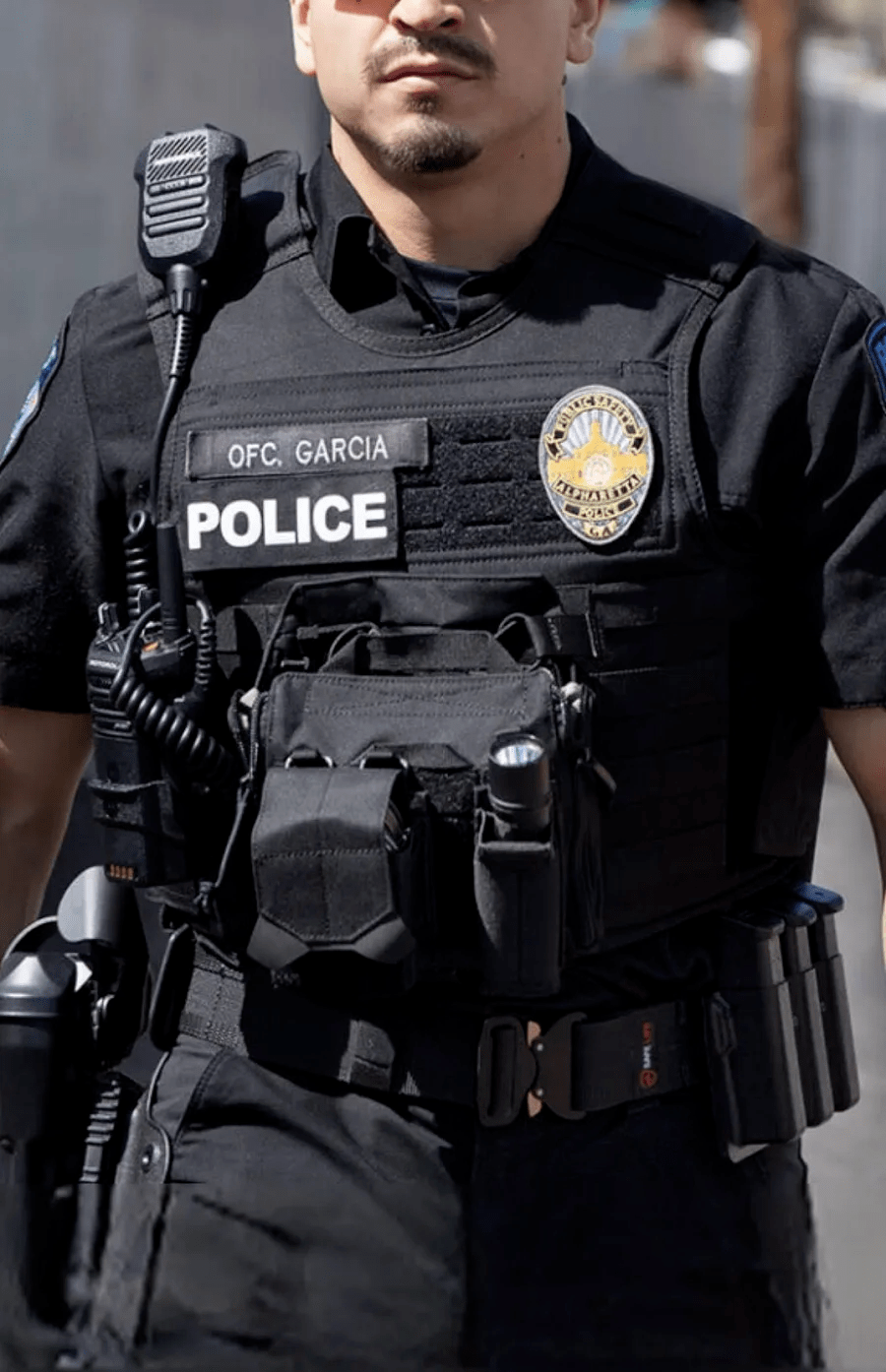
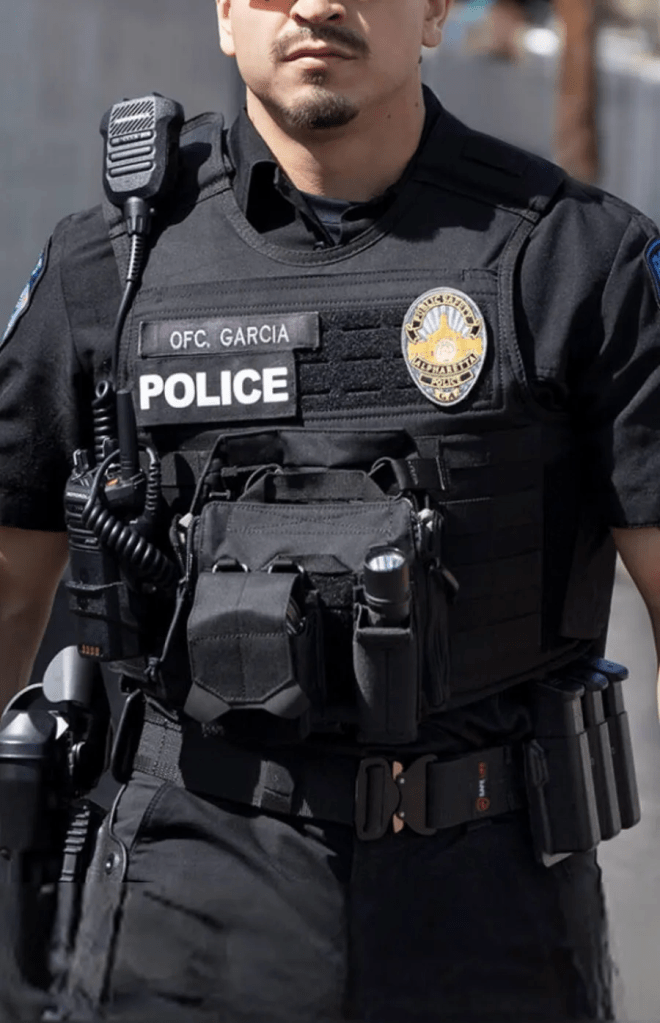
- Shoulder patches embroidered with the word “POLICE”
- Large back patches reading “POLICE”
- Uniform caps displaying “POLICE”
- Raid jackets worn over civilian clothes to make investigators “readily identified as law enforcement”
- A Class A dress uniform described as a “standard law enforcement uniform”
The policy applies broadly to Bureau of Investigation personnel and does not carve out special limitations for civil, family-court, or school-related operations.
No Training, Audits, or Safeguards on Misrepresentation
At the same time, the District Attorney’s Office stated in writing that it located no records responsive to requests for:
- Training materials on avoiding misrepresentation of law-enforcement authority
- Guidance on public perception of investigator attire
- Instruction on legal limits of police-like uniforms
- Audits or internal reviews evaluating attire worn by Child Abduction Unit personnel within the past five years
The agency emphasized that it has no obligation under the Public Records Act to create documents that do not already exist.
Appearance Rules Without Authority Clarity
The uniform policy is highly detailed when it comes to colors, insignia placement, rank markings, footwear, and equipment. However, it contains no guidance explaining how members of the public are supposed to distinguish DA investigators from municipal police officers, nor does it require investigators to affirmatively clarify their non-police status during interactions.
There is also no section addressing heightened risks of confusion in sensitive environments such as schools, family homes, or child-custody disputes — settings frequently encountered by the Child Abduction Unit.
Public Trust and Due-Process Concerns
Legal scholars and civil-rights advocates have long warned that visual authority plays a powerful role in public compliance, particularly in emotionally charged or high-stress encounters involving parents and children.
When state actors appear indistinguishable from police — yet operate under different statutory authority — questions arise about consent, due process, and the public’s ability to understand who is exercising power and under what legal framework.
The District Attorney’s Office did not dispute the authenticity of the policies produced, nor did it identify any supplemental safeguards beyond those contained in the uniform manual.
A Pattern Emerging Across Agencies
The response mirrors similar public-records disclosures obtained from other Southern California agencies, where departments acknowledged either limited or nonexistent written policies governing authority presentation, credentialing, or visual identification — particularly in inter-agency operations.
In this case, the DA’s office has now documented both sides of the equation: formal authorization to present as police, and the absence of formal oversight addressing the consequences of doing so.
What Happens Next
Because the response was issued under the California Public Records Act, it now forms part of the public record. Any future claims that such practices are unauthorized, rare, or governed by internal training would need to be reconciled with the agency’s written admission that no such records currently exist.
The District Attorney’s Office declined to comment beyond its written response.
Why this matters:
When authority is exercised in the name of the state — especially in matters involving children, families, and liberty — clarity is not optional. The public has a right to know not only who is acting, but under what authority, and how confusion is prevented.
For now, the paper trail shows uniforms are regulated — but public understanding is not.
 California Bay News
Leave a comment