By Michael Phillips | CABayNews — Policy & Politics
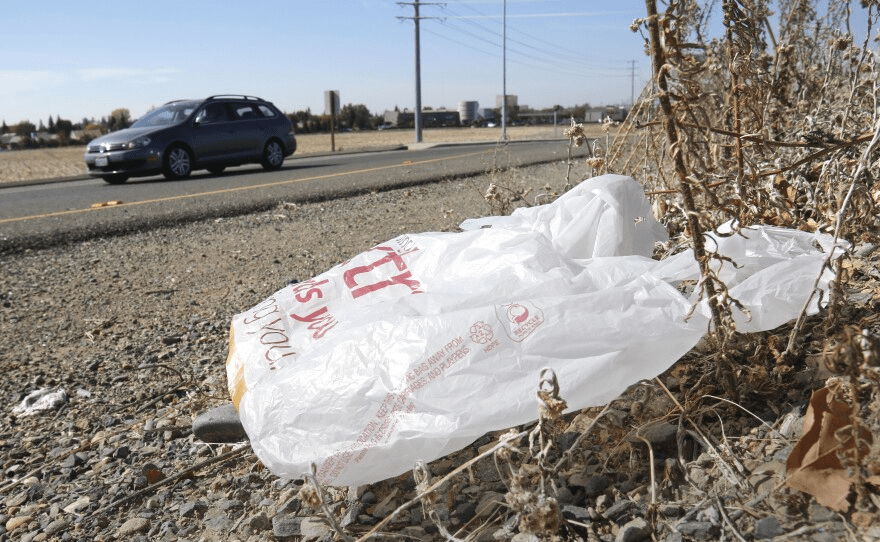
California politicians promised the 2016 plastic-bag ban would “save oceans,” “protect wildlife,” and “reduce landfill waste.”
Nine years later, none of that is true.
According to new reporting from the San Francisco Chronicle, California now uses more plastic by weight than before the ban — and the thicker “reusable” plastic bags legislators forced onto consumers are creating more waste, not less.
The state banned the thin, lightweight single-use bags that made up less than 3% of California’s waste stream, only to replace them with bags that use 3–4x more plastic per unit, require more energy to manufacture, and are almost never reused enough times to offset their environmental impact.
This is a classic California pattern:
Sacramento passes a law for headlines, ignores unintended consequences, doubles down when it fails, and blames the public when reality doesn’t match political marketing.
And now, lawmakers want a new ban — because the first one didn’t work.
A Policy Driven by Symbolism, Not Data
Before the original ban passed, environmental impact reports warned that thick reusable plastic bags would be harder to recycle, more expensive, and more resource-intensive.
The legislature ignored it.
Now, the Chronicle confirms what many warned years ago:
- Total plastic waste went up, not down.
- Reusable plastic bags are overwhelmingly single-use, defeating their purpose.
- Stores saw a spike in demand for still-legal thicker plastic bags, which require more oil and produce more emissions in both manufacturing and disposal.
Instead of solving a pollution problem, Sacramento created a new market for more harmful products — and congratulated itself for it.
Consumers Tried to Adapt. The Policy Didn’t.
California shoppers overwhelmingly support reducing pollution.
They bring tote bags, reuse old ones, keep boxes in trunks — people made a genuine effort.
But the market adapted faster than the law.
Grocery stores simply replaced banned bags with thicker ones that technically met state regulations but contained multiple times the amount of plastic.
Why?
Because they had to offer something, and customers still needed a way to carry home groceries.
Lawmakers passed a ban without a viable alternative, then acted shocked when reality didn’t bend to political will.
The Consequence of Feel-Good Policy Making
The failure of California’s bag ban is not an isolated event. It reflects a larger pattern:
- Energy policy: shutting down natural-gas plants without ensuring grid reliability.
- Housing policy: passing affordability laws while construction costs soar under regulation.
- Crime policy: reducing penalties for theft while retail collapses under organized shoplifting.
In each case, lawmakers design policies around ideological optics, not evidence.
The result?
Voters get rising costs, less reliability, and more government lectures.
Now Sacramento Wants a Second Ban — Without Owning the First Failure
Instead of revising the original law, lawmakers now propose banning all plastic bags — including the heavy reusable ones they mandated.
But without a functioning recycling infrastructure, without realistic alternatives, and without basic economic planning, California risks repeating the cycle:
- Pass symbolic policy.
- Ignore predictable unintended consequences.
- Blame businesses or consumers.
- Pass another law to “fix” the last one.
- Spend more, achieve less.
This is not environmental leadership — it’s political theater.
If California Wants Real Environmental Benefit, It Must Start With Honesty
A serious approach to waste reduction would include:
✔ Transparent statewide waste data
California still cannot track what happens to most “recycled” material.
✔ Investment in modern recycling facilities
The state exports waste overseas and hopes someone else handles it.
✔ Incentives for reusable, non-plastic materials
Canvas, hemp, woven polypropylene — not thicker plastic.
✔ Evaluation of policy outcomes before new laws are passed
An unheard-of concept in Sacramento, but desperately needed.
✔ A willingness to admit when laws don’t work
California’s political culture punishes honesty, but the public deserves it.
Conclusion: California Can Lead — but Only if It Learns
Environmental stewardship is a worthy goal.
California can and should lead.
But leadership requires discipline, data, and humility — not bans for headlines.
The failure of the plastic-bag ban is not a surprise. It is the predictable outcome of policymaking driven by symbolism rather than science, optics instead of outcomes.
Before lawmakers pass yet another sweeping restriction, they owe the public something rare in this state:
An admission that they got the last one wrong.
 California Bay News
Leave a comment