By Michael Phillips | CaBayNews
Los Angeles County leaders insist the region is on “stable financial footing.”
The numbers tell a very different story.
Behind closed doors, California’s largest county is wrestling with a financial mess years in the making: runaway homelessness spending, unsustainable labor costs, and an economic slowdown that Sacramento refuses to acknowledge. The result is a budget that grows every year while producing fewer results — and more taxes for residents.
But county officials are downplaying the size of the problem and how close Los Angeles is to a genuine fiscal crisis.
A Growing Deficit Hidden in Plain Sight
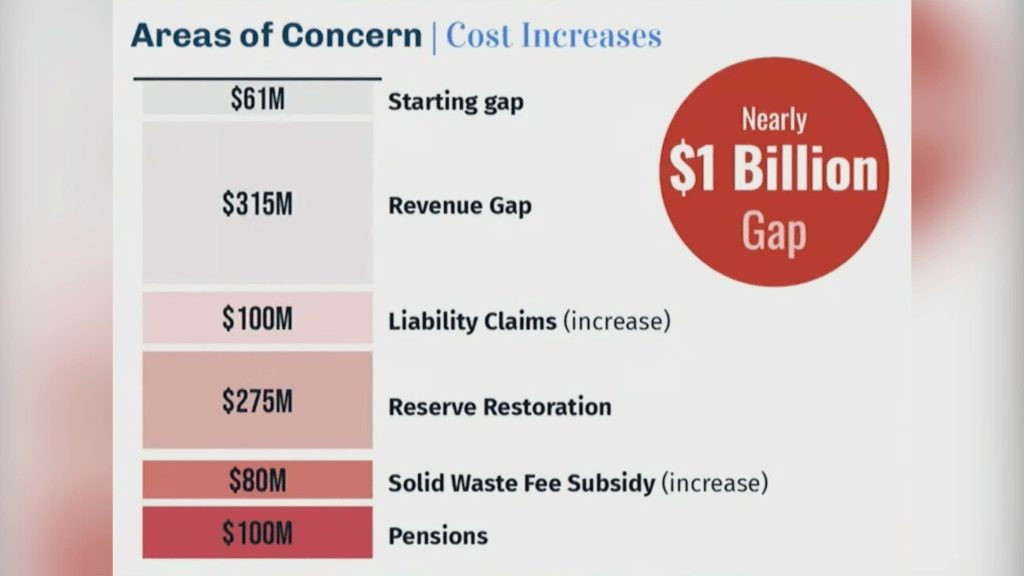
Los Angeles County’s 2025–2026 budget tops $47 billion, yet the county is quietly projecting hundreds of millions in structural deficits over the next several years. Much of this is not mentioned in public sessions — it’s buried inside internal forecasts and union negotiation memos.
The key drivers:
1. Homelessness Spending Has Exploded With No Accountability
Los Angeles County taxpayers now spend $3.5–$4 billion annually across dozens of programs.
Despite this:
- homelessness is rising
- encampments remain untouched
- residents see no measurable improvement
Meanwhile, audits that show failed spending rarely receive public hearings.
2. Labor Contracts Are Outpacing Revenue
Between raises, benefits, and pension obligations, labor costs are growing 2–3 times faster than county revenue.
Supervisors continue approving new labor agreements despite declining tax receipts.
3. A Shrinking Tax Base
Wealthy residents and small businesses are leaving California — and Los Angeles County is losing more taxpayers per capita than anywhere in the state.
Fewer taxpayers means fewer property, sales, and income taxes.
4. Voters Are Being Asked to Pay More
When fiscal mismanagement hits, LA County’s solution is always the same:
more taxes.
Measure A, Measure H renewals, “temporary” homelessness surcharges, public safety bonds — each new revenue stream passes while oversight remains weak.
The “Homelessness Industrial Complex” Problem
Los Angeles County has effectively built an entire industry around homelessness:
- six-figure nonprofit salaries
- no-bid contracts
- duplicate programs
- overlapping agencies
- billions spent without metrics
Supervisors continue expanding the system because every dollar spent creates new political allies — even though outcomes worsen.
This matters because homelessness is now the single largest discretionary item in the county budget.
And there is no sign of slowing.
Why County Officials Won’t Talk About the Crisis
The Board of Supervisors avoids the phrase “budget deficit” for one reason:
admitting it would require accountability.
Instead, they use softer language like:
- “departmental pressures”
- “structural alignment issues”
- “revenue moderation”
But the truth is simple — the county can no longer sustain the level of spending politicians promised.
If the economy slows or a recession hits, Los Angeles County will be forced into:
✔ emergency cuts
✔ tax hikes
✔ layoffs
✔ reduction of services
Officials know this.
Residents don’t — at least not yet.
What This Means for Residents
Los Angeles County taxpayers should expect:
- new tax proposals framed as “temporary”
- cuts to public safety and emergency services
- continued increases in homelessness despite spending
- further flight of businesses and middle-class families
Even basic county services — DPH, DCFS, DPSS, the courts — may face disruptions if the budget gap widens.
Meanwhile, the county continues expanding programs it can’t afford.
The Bottom Line
Los Angeles County is heading toward a financial reality check.
The warning signs are everywhere — declining revenue, bloated spending, and homelessness programs with no visible improvement.
But instead of acknowledging the crisis, county officials are hoping taxpayers won’t notice.
CABayNews will track upcoming budget hearing, labor negotiation, and tax measure — because if county leaders won’t tell the truth about the numbers, we will.
 California Bay News
Leave a comment